Test Capstone Fall 2026

University of Study, Test
Test Capstone Fall 2026
11/09/2026 to 12/11/2026
Educator Test Account
Collaboration Overview
About Students
Students participating in this program are upper-level undergraduate students studying Sociology and Public Health at The University of Texas at Dallas, with many completing the experience near the end of their undergraduate studies.

The course functions as a capstone-style experience in which students apply knowledge and skills developed throughout their academic programs to a real organizational challenge. By this point in their studies, students have significant exposure to research methods and are prepared to explore how those capabilities can be applied in professional environments. 

UT Dallas Public Health students study the social, structural, and cultural factors that influence health at the individual and population levels. Their curriculum includes preparation in social epidemiology, statistics, research methods, program development, and program evaluation.

Sociology students similarly develop skills in empirical analysis and professional communication while learning to apply sociological perspectives in settings such as corporations, government agencies, nonprofit organizations, policy research, social services, education, and health care.

Depending on team composition and project needs, students may bring capabilities in qualitative and quantitative research, secondary data analysis, survey and interview research, literature review, program evaluation, stakeholder analysis, data interpretation, social inequality, health disparities, community research, and professional communication.

The experience is also intentionally designed to develop students' confidence operating in professional environments. Students practice interacting with organizational stakeholders, asking effective questions, responding to feedback, managing project responsibilities, presenting research findings, and explaining how their academic skills create value outside the classroom.
Student Level:   Bachelor Degree

Student Time Commitment:   Full Time

Team Structure:   4 - 6

About Program Goals
Through the Applied Research Consulting Project, students will:
  • Apply sociology, public health, and social science research skills to an authentic organizational challenge.
  • Translate an ambiguous organizational problem into focused and answerable research questions.
  • Determine which qualitative, quantitative, or mixed research approaches are appropriate for the project.
  • Conduct credible secondary research using academic, governmental, nonprofit, industry, and other appropriate sources.
  • Analyze existing organizational or public datasets where appropriate.
  • Design and conduct surveys, interviews, focus groups, observations, or other forms of primary research when feasible.
  • Apply research methods outside of a traditional academic research-paper environment.
  • Analyze stakeholder, employee, community, client, patient, or population needs as appropriate to the challenge.
  • Evaluate organizational programs, interventions, policies, or services using available evidence.
  • Identify meaningful patterns, gaps, barriers, disparities, and opportunities.
  • Translate research findings into clear, evidence-based recommendations for organizational decision-makers.
  • Consider social context, equity, health disparities, community impact, and unintended consequences when appropriate.
  • Communicate research findings clearly to both technical and non-technical audiences.
  • Strengthen teamwork, project management, client communication, professional writing, and presentation skills.
  • Learn how to solicit, interpret, and respond professionally to substantive client feedback.
  • Build confidence explaining how social science and public health research skills can create value in professional settings.
  • Develop a meaningful, resume-ready experience that students can discuss in interviews and future professional opportunities.
About the Collaboration Format
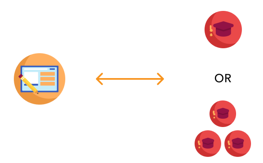
Class project framed as a live case study for one or more student teams to work on.
Benefits for Industry Partners
Participating organizations receive focused research and analysis from a team of upper-level Sociology and Public Health students while helping prepare emerging professionals for careers in public health, nonprofits, research, government, community organizations, and other sectors.

Applied Research Capacity
Student teams can investigate organizational questions that staff recognize as important but may not have the time or resources to research comprehensively.

Program & Service Evaluation
Students can examine existing programs, initiatives, interventions, or services; assess available evidence; identify gaps; and develop recommendations for improvement.

Stakeholder & Community Insight
Projects can help organizations better understand the needs, experiences, attitudes, behaviors, and barriers affecting employees, clients, patients, students, residents, or other stakeholder populations.

Public Health & Social Impact Perspective
Students can apply frameworks related to social determinants of health, health disparities, inequality, community well-being, organizational systems, and social context where relevant to the project.

Evidence-Based Recommendations
The goal is not simply to produce a deliverable. Student teams investigate the underlying problem and use research findings to explain why a particular recommendation should be considered.

Fresh Interdisciplinary Thinking
Teams may combine Sociology and Public Health students, giving organizations perspectives that cross population health, social science, organizational, workforce, policy, and community lenses.

Emerging Talent & Mentorship
Partners interact directly with students approaching the workforce and have an opportunity to observe their research ability, communication, initiative, professionalism, teamwork, and responsiveness to feedback.
Program Details

Students Include: Bachelor Degree

Students Enrolled:  Students Enrolled

Program Duration: 4 weeks

Program Launch Date: 11/09/26

Program End Date: 12/11/26

Student Commitment: 4-7 Hours hrs/week

Course Format: Test Live Case Fall, Single Project Single Team

Modality: Fully Remote

# of Projects:

View All Program Details

Project Requirements

Industry Partner Requirements
Project Topics Corporate Social Responsibility Organizational Culture Strategic Planning Training & Development
Location Preferences

Located Anywhere

Compensation

Following compensation will be offered to the students


Between $12.0 to $18.0 per hour

Sponsorship

Sponsorship Requested (Optional):

Pre-Revenue Startup an exact contribution amount of $

Growth Startup an exact contribution amount of $

Small to Medium Business an exact contribution amount of $

Large Enterprise an exact contribution amount of $

Government Organization an exact contribution amount of $

Non-Profit an exact contribution amount of $

Other Requirements
The strongest projects will begin with a real research question or organizational problem rather than a predetermined production task.

Participating Industry Partners should be prepared to:
  • Provide a meaningful organizational, community, workforce, policy, social, or public health challenge that requires investigation and analysis.
  • Ensure the project contains a substantive research component.
  • Allow students to explore the problem and develop findings rather than simply execute predefined instructions.
  • Designate an engaged project manager or mentor who is interested in working directly with students.
  • Participate in a kickoff meeting to explain the organization, challenge, stakeholders, and desired outcomes.
  • Meet with students regularly throughout the project, ideally weekly or biweekly.
  • Provide candid, substantive feedback rather than simply approving student work.
  • Challenge students to revise or deepen their work when additional analysis is needed.
  • Share appropriate organizational context, reports, datasets, research, policies, or other relevant materials when possible.
  • Facilitate reasonable access to employees, clients, community members, users, subject-matter experts, or other stakeholders when primary research is appropriate.
  • Help students understand how research is used in the organization's actual decision-making process.
  • Participate in a final presentation or review final recommendations whenever possible.
Projects should not primarily consist of routine administrative or production work such as simply creating a website, producing social media content, entering data, or completing repetitive tasks. Communication, marketing, or digital deliverables may be part of a project when they emerge from a substantive research and analytical process.

Partner engagement is particularly important. Dr. Skaggs noted that prior projects were strongest when organizational mentors provided explicit feedback, asked students to revisit work, and helped them understand professional expectations rather than merely approving each step.
Project Management Time Commitment 1 Hour per week
Interested Industries Aerospace & Defense Agriculture & Farming Arts & Recreation Biotech & Pharmaceuticals Computers & Hardware Construction, Repair & Maitenance Consulting & Professional Services Consumer Products & Services Education & Ed-Tech Energy & Utilities Fashion & Apparel Finance & Investment Food & Beverage Government Health Care & Life Sciences Insurance Manufacturing & Industrial Media, Publishing & Content Natural Resources Non-Profit & Social Impact Public Works Real Estate Restaurants, Hospitality & Food Service Retail & E-Commerce Semiconductor Software, AI & Data Sports & Entertainment Sustainability & Climate Telecommunications Transportation & Logistics Travel & Tourism
Skills & Expertise
Applied Research
Key Program Dates Due Date
Official Program Launch

We’ll find a time on this day for you to meet with the students to kick off your project.

Nov 09 2026
Proposal Application Deadline

Final date for Industry Partners to express interest in participating.

Nov 09 2026, 10:13 AM ET
Finalize Project Charter

Educators and Industry Partners finalize project charters, legal documents, and background materials.

Nov 09 2026, 10:13 AM ET
Request for Proposal published

Collaboration request published. Industry Partners may express interest in participating.

Nov 09 2026, 10:13 AM ET
Interview

Educators will begin interviewing interested Industry Partners to discuss project ideas.

Nov 09 2026, 10:13 AM ET
Official Program End

We’ll find a time on this day for you to meet with the students to wrap up your project.

Dec 11 2026

* We’ve got some inspirational project ideas below! These are related project topics that you can mix and match the components for the best cross-functional project experience possible.

Corporate Social Responsibility

Organizational Culture

Strategic Planning

Training & Development

Program Overview
Program Title Test Capstone Fall 2026
Organization University of Study, Test
Student Application Link https://capsource.app/program/test-capstone-fall-2026/rfp
# of Students Enrolled
1
# of Projects Running
2 Project/s Added (of Expected)

Program Timeline

Project Duration

Start Date: 11/09/26      End Date: 12/11/26

1 month

Collaboration Overview
About Students

Students participating in this program are upper-level undergraduate students studying Sociology and Public Health at The University of Texas at Dallas, with many completing the experience near the end of their undergraduate studies.

The course functions as a capstone-style experience in which students apply knowledge and skills developed throughout their academic programs to a real organizational challenge. By this point in their studies, students have significant exposure to research methods and are prepared to explore how those capabilities can be applied in professional environments. 

UT Dallas Public Health students study the social, structural, and cultural factors that influence health at the individual and population levels. Their curriculum includes preparation in social epidemiology, statistics, research methods, program development, and program evaluation.

Sociology students similarly develop skills in empirical analysis and professional communication while learning to apply sociological perspectives in settings such as corporations, government agencies, nonprofit organizations, policy research, social services, education, and health care.

Depending on team composition and project needs, students may bring capabilities in qualitative and quantitative research, secondary data analysis, survey and interview research, literature review, program evaluation, stakeholder analysis, data interpretation, social inequality, health disparities, community research, and professional communication.

The experience is also intentionally designed to develop students' confidence operating in professional environments. Students practice interacting with organizational stakeholders, asking effective questions, responding to feedback, managing project responsibilities, presenting research findings, and explaining how their academic skills create value outside the classroom.
Student Level:   Bachelor Degree

Student Time Commitment:   Full Time

Team Structure:   4 - 6

Student Level:   Bachelor Degree

Student Time Commitment:   Full Time

Team Structure:   -

Program Goals
Through the Applied Research Consulting Project, students will:
  • Apply sociology, public health, and social science research skills to an authentic organizational challenge.
  • Translate an ambiguous organizational problem into focused and answerable research questions.
  • Determine which qualitative, quantitative, or mixed research approaches are appropriate for the project.
  • Conduct credible secondary research using academic, governmental, nonprofit, industry, and other appropriate sources.
  • Analyze existing organizational or public datasets where appropriate.
  • Design and conduct surveys, interviews, focus groups, observations, or other forms of primary research when feasible.
  • Apply research methods outside of a traditional academic research-paper environment.
  • Analyze stakeholder, employee, community, client, patient, or population needs as appropriate to the challenge.
  • Evaluate organizational programs, interventions, policies, or services using available evidence.
  • Identify meaningful patterns, gaps, barriers, disparities, and opportunities.
  • Translate research findings into clear, evidence-based recommendations for organizational decision-makers.
  • Consider social context, equity, health disparities, community impact, and unintended consequences when appropriate.
  • Communicate research findings clearly to both technical and non-technical audiences.
  • Strengthen teamwork, project management, client communication, professional writing, and presentation skills.
  • Learn how to solicit, interpret, and respond professionally to substantive client feedback.
  • Build confidence explaining how social science and public health research skills can create value in professional settings.
  • Develop a meaningful, resume-ready experience that students can discuss in interviews and future professional opportunities.
Format Structure

Single Project Single Team

Format Title Test Live Case Fall
Format Description
Class project framed as a live case study for one or more student teams to work on.
Benefits For Industry Partners
Participating organizations receive focused research and analysis from a team of upper-level Sociology and Public Health students while helping prepare emerging professionals for careers in public health, nonprofits, research, government, community organizations, and other sectors.

Applied Research Capacity
Student teams can investigate organizational questions that staff recognize as important but may not have the time or resources to research comprehensively.

Program & Service Evaluation
Students can examine existing programs, initiatives, interventions, or services; assess available evidence; identify gaps; and develop recommendations for improvement.

Stakeholder & Community Insight
Projects can help organizations better understand the needs, experiences, attitudes, behaviors, and barriers affecting employees, clients, patients, students, residents, or other stakeholder populations.

Public Health & Social Impact Perspective
Students can apply frameworks related to social determinants of health, health disparities, inequality, community well-being, organizational systems, and social context where relevant to the project.

Evidence-Based Recommendations
The goal is not simply to produce a deliverable. Student teams investigate the underlying problem and use research findings to explain why a particular recommendation should be considered.

Fresh Interdisciplinary Thinking
Teams may combine Sociology and Public Health students, giving organizations perspectives that cross population health, social science, organizational, workforce, policy, and community lenses.

Emerging Talent & Mentorship
Partners interact directly with students approaching the workforce and have an opportunity to observe their research ability, communication, initiative, professionalism, teamwork, and responsiveness to feedback.
Project Modality Fully Remote
Industry Partner Requirements to Participate
Project Topics Corporate Social Responsibility Organizational Culture Strategic Planning Training & Development
Target Industries Aerospace & Defense Agriculture & Farming Arts & Recreation Biotech & Pharmaceuticals Computers & Hardware Construction, Repair & Maitenance Consulting & Professional Services Consumer Products & Services Education & Ed-Tech Energy & Utilities Fashion & Apparel Finance & Investment Food & Beverage Government Health Care & Life Sciences Insurance Manufacturing & Industrial Media, Publishing & Content Natural Resources Non-Profit & Social Impact Public Works Real Estate Restaurants, Hospitality & Food Service Retail & E-Commerce Semiconductor Software, AI & Data Sports & Entertainment Sustainability & Climate Telecommunications Transportation & Logistics Travel & Tourism
Skills & Expertise Applied Research
Location Information & Preferences

Located Anywhere

The program welcomes organizations from Dallas–Fort Worth, throughout the United States, and internationally.

Local organizations are especially attractive when students can benefit from optional site visits, community exposure, or in-person interaction. However, strong remote projects are equally appropriate.

International projects are explicitly welcomed when the project can be completed virtually, and the organization can maintain regular communication with the student team.

Sponsorship

Sponsorship Requested (Optional):

Pre-Revenue Startup an exact contribution amount of $

Growth Startup an exact contribution amount of $

Small to Medium Business an exact contribution amount of $

Large Enterprise an exact contribution amount of $

Government Organization an exact contribution amount of $

Non-Profit an exact contribution amount of $

Compensation
Following compensation will be offered to the students:

Between $12.0 to $18.0 per hour

Other Requirements
The strongest projects will begin with a real research question or organizational problem rather than a predetermined production task.

Participating Industry Partners should be prepared to:
  • Provide a meaningful organizational, community, workforce, policy, social, or public health challenge that requires investigation and analysis.
  • Ensure the project contains a substantive research component.
  • Allow students to explore the problem and develop findings rather than simply execute predefined instructions.
  • Designate an engaged project manager or mentor who is interested in working directly with students.
  • Participate in a kickoff meeting to explain the organization, challenge, stakeholders, and desired outcomes.
  • Meet with students regularly throughout the project, ideally weekly or biweekly.
  • Provide candid, substantive feedback rather than simply approving student work.
  • Challenge students to revise or deepen their work when additional analysis is needed.
  • Share appropriate organizational context, reports, datasets, research, policies, or other relevant materials when possible.
  • Facilitate reasonable access to employees, clients, community members, users, subject-matter experts, or other stakeholders when primary research is appropriate.
  • Help students understand how research is used in the organization's actual decision-making process.
  • Participate in a final presentation or review final recommendations whenever possible.
Projects should not primarily consist of routine administrative or production work such as simply creating a website, producing social media content, entering data, or completing repetitive tasks. Communication, marketing, or digital deliverables may be part of a project when they emerge from a substantive research and analytical process.

Partner engagement is particularly important. Dr. Skaggs noted that prior projects were strongest when organizational mentors provided explicit feedback, asked students to revisit work, and helped them understand professional expectations rather than merely approving each step.
Expected Time Commitment For Project Managers 1 Hour per week
Key Program Dates Due Date
Official Program Launch

We’ll find a time on this day for you to meet with the students to kick off your project.

Nov 09 2026
Proposal Application Deadline

Final date for Industry Partners to express interest in participating.

Nov 09 2026, 10:13 AM ET
Finalize Project Charter

Educators and Industry Partners finalize project charters, legal documents, and background materials.

Nov 09 2026, 10:13 AM ET
Request for Proposal published

Collaboration request published. Industry Partners may express interest in participating.

Nov 09 2026, 10:13 AM ET
Interview

Educators will begin interviewing interested Industry Partners to discuss project ideas.

Nov 09 2026, 10:13 AM ET
Official Program End

We’ll find a time on this day for you to meet with the students to wrap up your project.

Dec 11 2026

Case Assessment

Case Title Topics
Recommend Steps for Recruitment in Building Diverse Leadership Teams Corporate Social Responsibility
Educator Test Account
View Profile
University of Study
@ Cap Source Technologies for 2026 year(s)
Ip Test
View Profile
CapSource Technologies

Resources

Links & Documents
Test Doc pages

Projects

Filters
Project Organization Topics